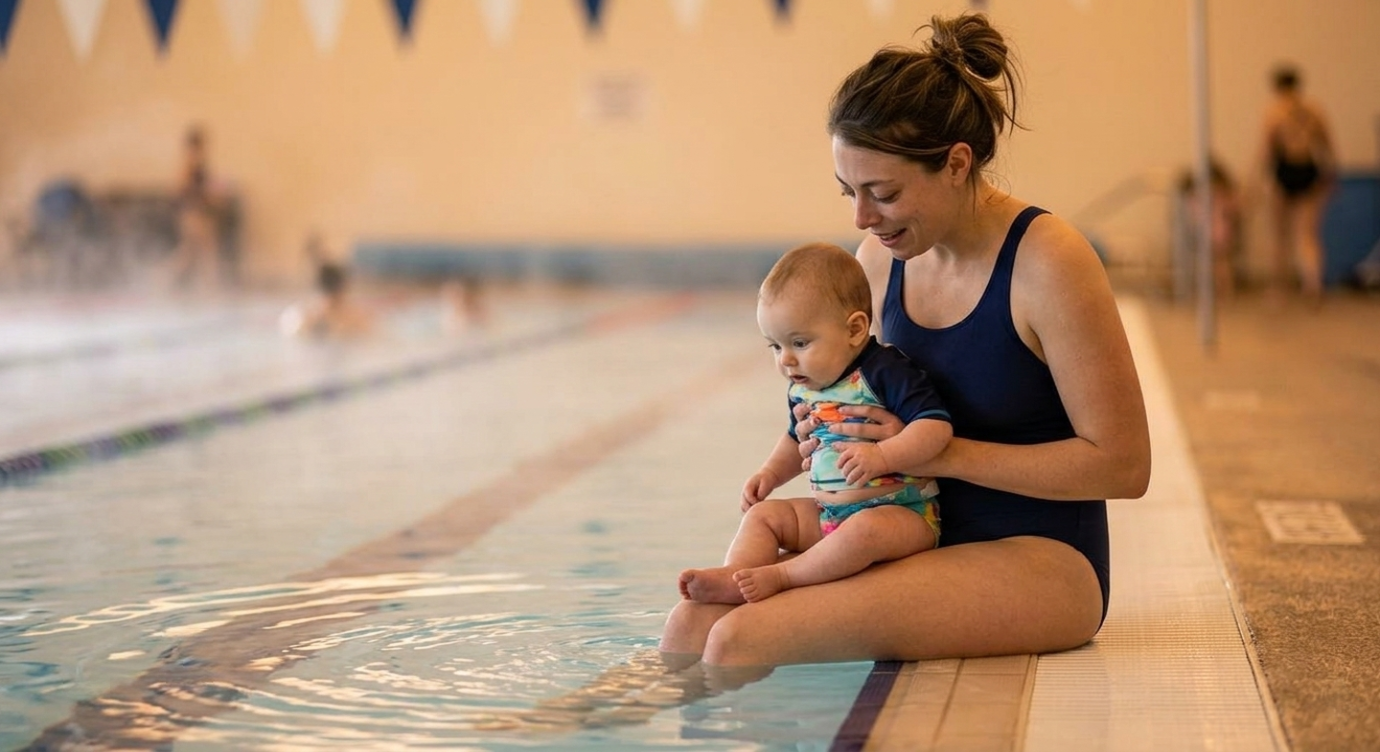
Before you Google “newborn swimming classes near me” and sign up for the first thing you find, read this. The truth about when to start, what actually happens in those classes, and how to keep your baby genuinely safe in the water.
US each year (CDC)
children under 14
water familiarization
for infant classes
Why the first newborn swimming class feels overwhelming
There is something both thrilling and terrifying about putting your tiny baby into a pool for the first time. Your heart is in your throat. You are scanning the instructor’s face for reassurance. And somewhere in the back of your mind, you are wondering whether you made the right call signing up for this at all.
That feeling is completely normal. After all, water is something parents instinctively feel protective around, and for good reason. Drowning is the leading cause of accidental death for children between the ages of one and four in the United States. Still, that statistic is not meant to scare you. Rather, it is meant to give you a sense of why so many pediatricians, safety experts, and parents swear by getting babies familiar with water early.
What newborn swimming lessons are really designed to teach
What many parents discover, though, is that newborn swimming lessons are nothing like they imagined. These classes are not about teaching your two-month-old the backstroke. Instead, they are warm, gentle, playful sessions where you are in the water with your baby the whole time, building comfort and trust and a relationship with the water that can genuinely protect your child for the rest of their life.
This guide covers everything. When to start. What actually happens in class. The real benefits backed by research. The safety rules that are non-negotiable. What to look for in a program and what to run from. What to pack. And two products that make the whole experience easier and more comfortable for you and your baby. By the end of this, you will have everything you need to make a clear, confident decision.
What newborn swimming lessons actually are
Let us get one thing out of the way immediately. When most people hear the phrase “newborn swimming lessons,” they picture a tiny baby paddling independently across a pool. That image is not reality, and any program that promises anything close to it for an infant under six months should be approached with caution.
What these classes actually are, in their best and most reputable form, is water familiarization. Parent-and-baby aquatic sessions where the goal is not independent swimming but something far more valuable: building your baby’s trust in water, their comfort with being submerged and supported, and your own confidence in handling your baby safely in an aquatic environment.
You are in the water the whole Time
You are in the pool the entire time. Your baby never leaves your arms or the instructor’s direct supervision. The water is warm enough that your baby is relaxed rather than rigid from the cold. Songs are sung. Games are played. Your baby kicks and splashes and looks at you with either delight or mild suspicion, depending on their personality that day.
These sessions are typically called parent-and-baby classes, water babies programs, or infant aquatics courses. The terminology varies by provider, but the structure is essentially the same. Sessions run between twenty and thirty minutes, which is the physiological limit for how long a baby can safely maintain body temperature in water. They meet once or twice a week. And the progression is gentle, purposeful, and always paced to your baby’s cues.
It should not be a choice. It should be an absolute necessity. I put it on the same lines as wearing a seatbelt.
Rita Goldberg’s words are blunt and intentional. She has spent decades watching parents underestimate water risk. The seatbelt analogy is particularly apt because no one questions whether to buckle their child in a car. Clearly, water safety deserves the same automatic, non-negotiable status in a parent’s mind.
That does not mean you sign up for a class the week you bring your baby home from the hospital. There is a right time for this, and understanding when that is matters just as much as understanding what the classes involve.
When to start newborn swimming classes
The question of timing is where parents get the most conflicting information. Some programs will accept babies as young as six weeks. The American Academy of Pediatrics recommends swim lessons as a layer of protection against drowning that can begin for many children starting at age one. Meanwhile, most individual experts land somewhere in between, with six months being the most commonly cited optimal starting point.
The reason for this range is that there is no single correct answer. Every baby develops at a different pace. What is right for a physically robust, bath-loving five-month-old is not necessarily right for a more cautious or smaller baby at the same age. Ultimately, what matters more than a specific number is a combination of factors that you and your pediatrician are best placed to assess together.
Water play at home, not pool classes yet
The umbilical cord stump needs to be fully healed before any pool exposure. Focus on warm, confident bath time as the first introduction. This builds the positive water associations that infant classes build on later.
Some programs begin here, with pediatrician clearance
Babies still have a natural dive reflex at this stage, meaning they instinctively hold their breath when submerged briefly. Classes at this age are extremely gentle, focused purely on water comfort and sensory exposure.
The sweet spot that most experts recommend
By six months, most babies have better head and neck control, stronger immune systems, and developing awareness that makes the water experience richer and more productive. Rita Goldberg recommends this age specifically because babies begin developing a concept of fear around eight months, so early exposure before that window sets a positive foundation.
The American Academy of Pediatrics recommendation
At one year, children become mobile and can access water independently for the first time. The AAP specifically flags this as the age where drowning risk increases significantly, making swim lessons a critical safety priority from this point onward.
Most children are ready for standard swim lessons
By age four, most children can learn survival skills including treading water, floating on their back, and swimming to an exit point. Children who started water familiarization earlier tend to reach this stage with significantly more confidence and ease.
Before you book any class
Talk to your pediatrician first, especially if your baby was born prematurely, has any skin conditions like eczema, has had recent illness, or was born with any cardiac or respiratory conditions. Pool water, even well-maintained pool water, is not appropriate for every baby at every age, and your doctor is the right person to make that call with you.
Once you have the green light, trust your instincts too. A baby who cries through every bath and seems genuinely distressed by water may need a slower, gentler introduction than a baby who kicks and splashes with joy from week one. Neither response is wrong. Both just tell you where to start.
The real benefits of infant swimming lessons
Parents often come to newborn swimming classes primarily for safety reasons and leave having discovered a whole set of benefits they never anticipated. As it turns out, the research on early infant aquatics is genuinely compelling, covering physical development, cognitive growth, emotional bonding, and long-term water confidence in ways that surprise even skeptical parents.
Here is what the evidence actually shows.
One finding that surprises many parents is the emotional maturity component. Children who attend regular infant swim classes interact with other babies and adults in an environment that is distinctly different from home or daycare. As a result, they learn to read cues, respond to instruction, and navigate a shared space with other people. The social confidence that develops in those classes tends to show up in other settings too.
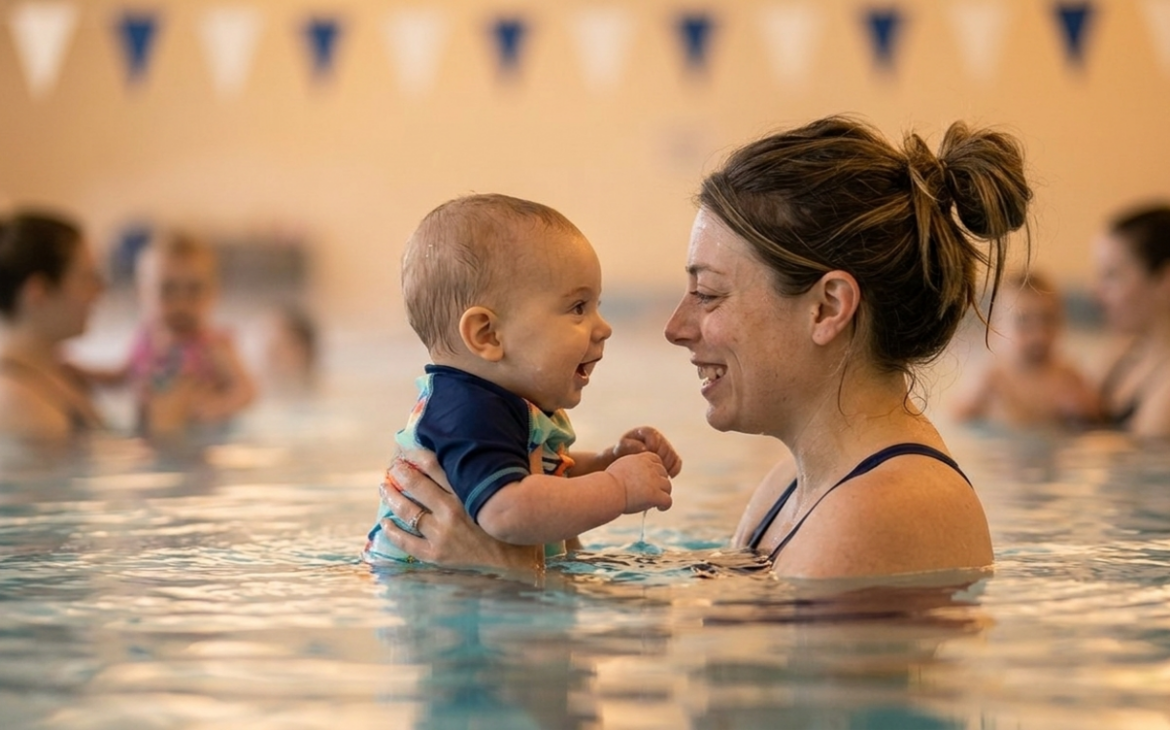
Real parent experience backs this up consistently.For example, Jessica, a mother from Denver who started her daughter in water familiarization classes at six months, described it this way: her daughter went from screaming through every bath at four months to being the most enthusiastic person in the pool by eight months. By eighteen months, she was jumping off the side of the pool with her arms out, laughing. Not because the class taught her to swim independently, but because the class taught her that water was fun and safe and nothing to fear.
Water safety: the rules that are not optional
Here is where we need to be completely honest with you, because not every piece of content about newborn swimming classes is. Safety in infant aquatics is not about fear-mongering. Rather, it is about understanding the specific vulnerabilities that babies have in water and making sure every single class, every instructor, and every facility you use takes those vulnerabilities seriously.
These are the things that matter.
Temperature Matters Enormously
Babies lose body heat faster than adults. Water should be kept between 88–92°F (31–33°C). If it feels cool to you, it is too cold for an infant.
Short Sessions Only
Sessions must stay between 20–30 minutes. Longer exposure increases risk of fatigue, overstimulation, and temperature drop.
No Forced Submersion
Babies should never be dunked without proper breath cue conditioning. Submersion must always follow predictable, trained signals.
Parent Must Be in Water
A caregiver must remain in the pool at all times. Parents are the child’s primary safety anchor during early lessons.
Proper Swim Diapers Required
Double-layer protection (disposable + reusable swim diaper cover) is mandatory to maintain hygiene and safety for all children.
No Illness Policy
Fever, infections, diarrhea, or open wounds require staying home to protect both your baby and others in the class.
Facility Standards Must Be Met
Water clarity, low chemical smell, lifeguard presence, clean changing areas, and visible safety rules are non-negotiable.
Swimming Is Not Drown-Proofing
No child is ever drown-proof. Constant supervision near water is required at all times, regardless of swimming experience.
On the question of forcible submersion, this deserves a specific moment of attention because it remains a controversial practice in some programs. You may have seen videos online of instructors flipping babies face-down in water to “trigger their survival instinct.” Notably, the American Academy of Pediatrics, the Red Cross, and essentially every mainstream pediatric safety organization oppose this approach for infants. A baby’s dive reflex, which is the natural breath-holding response triggered by water contact, fades by around six months. After that age, therefore, submersion should be introduced incrementally, with cues, with the parent present, and only when the baby shows clear readiness. Any program that presents forcible submersion as a routine or beneficial technique for very young infants should be avoided.
Despite popular videos online, babies should never be forcefully dunked underwater. Submersion should always be preceded by a clear, consistent cue that your baby has been conditioned to recognize.
How to choose the right newborn swimming class
Not all infant swim programs are created equal. The difference between an exceptional program and a mediocre one is not always obvious from a website or a phone call. So here is what to look for when you visit, what questions to ask, and a few red flags that should make you walk away.
Check the instructor’s qualifications specifically for infant aquatics
General swim instructor certification is not enough. Look for infant and toddler aquatics certifications from recognized bodies like the American Red Cross or YMCA.
Verify the pool temperature before you commit
Infant-safe pools should be 86–92°F. If the facility cannot confirm the exact temperature, it is not properly prepared for infant classes.
Visit the facility before your baby’s first class
Observe a session if possible. Check cleanliness, instructor behavior, and water quality before enrolling.
Ask about class size
Ideal infant groups are 6–8 pairs. Larger groups reduce safety control and learning quality.
Look at the curriculum structure
A proper program follows a clear progression from water comfort to survival skills. Lack of structure is a warning sign.
Trust the national programs
YMCA, Red Cross, British Swim School, Goldfish Swim School, Aqua-Tots, and Bear Paddle Swim School offer structured and verified systems.
Red Flags to Walk Away From
Steer clear of any program that promises your baby will be “swimming independently” within a set number of classes.
Watch out for instructors who force submersion without prior cued breath training.
Equally concerning is a facility where parents are required to watch from the deck rather than be in the water with their baby.
Swim diapers should always be required. A pool that skips this rule is not taking hygiene seriously.
Beyond that, leave any program that pressures you to push your baby past their obvious comfort level.
Finally, if the instructor cannot clearly explain their qualification in infant-specific aquatics training, that is reason enough to walk away.
Your instincts are valid. If something feels wrong, it probably is. Ask questions. Push back. Leave if you need to. Your baby’s safety and trust are worth more than any class fee or scheduling convenience.
What to pack for newborn swimming classes
First-time parents notoriously overpack for swim class. At the same time, you also do not want to be the parent who shows up without a swim diaper and has to sit out the session. So here is the honest, practical list of what you actually need.
The Complete Newborn Swim Class Packing List
What to expect at your first newborn swimming class
Even with thorough research, many parents arrive at the first class feeling completely unprepared for what they find. The noise hits you first. After that come the other babies, the warm slightly humid air of an indoor pool, and your own nervousness rising to meet all of it. Here is a walk through what a typical first class looks like, so you can arrive feeling ready.
Get there early for the first class. You will need time to figure out the changing area, get yourself and your baby into swim gear, and settle in. Do not rush this. A calm parent helps a calm baby.
The instructor gathers everyone poolside, explains the session, introduces themselves, and covers safety rules. Listen carefully and ask questions if needed.
You enter first, then your baby joins you. The instructor guides how to hold them safely. Reactions vary—crying, curiosity, or calm—all are normal. Stay steady and reassuring.
Structured activities include songs, gentle kicking, splashing, floating support, and playful water games. The instructor adapts constantly to each baby’s comfort level.
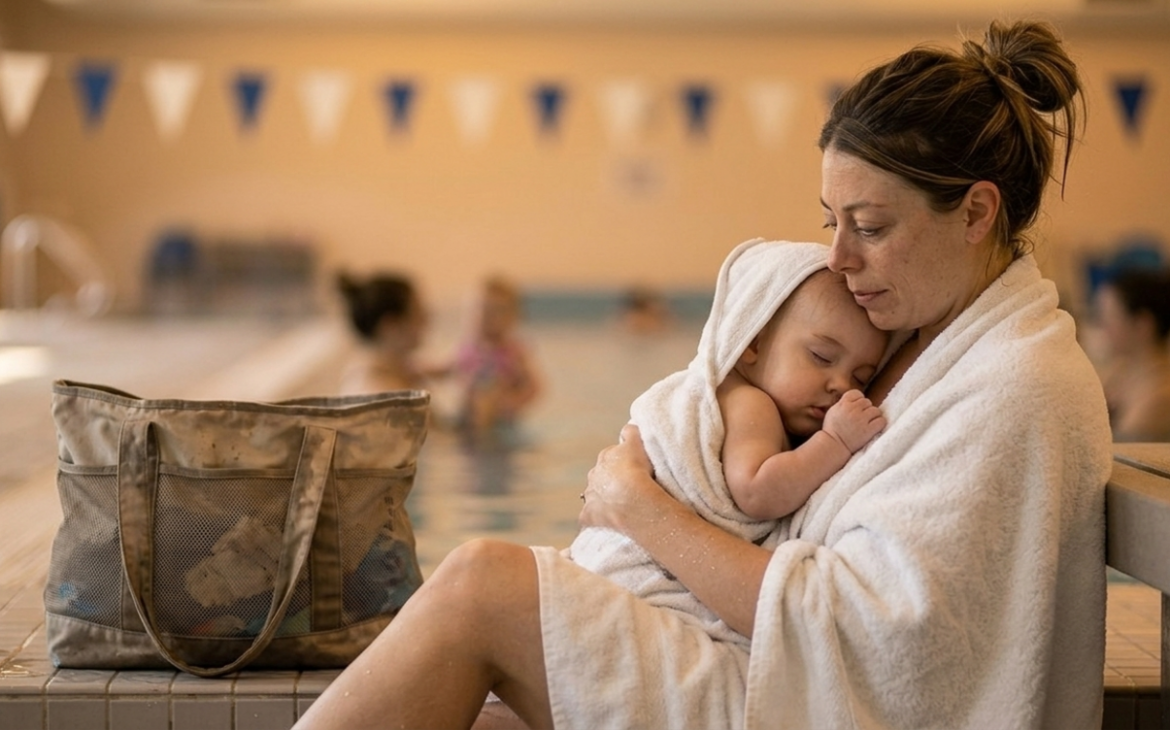
Wrap your baby immediately in a warm towel. Their body temperature drops fast after water. Head quickly to the changing area, dry, dress warmly, and prepare for feeding.
Expect a deep, long nap. The combination of movement, water stimulation, and emotional engagement usually leaves babies completely relaxed.
Your baby’s response is not a report card
One thing worth saying plainly: the first class is almost never your baby’s best class. It takes a few sessions for a baby to understand what is happening, to get comfortable with the instructor’s voice and the pool environment, and to start relaxing into the experience. So do not judge the program or your baby’s response based on session one. Instead, give it three or four classes before drawing any conclusions. The transformation that happens between class one and class four is often remarkable.
What real parents say about infant swim lessons
The research matters. The safety guidelines matter. But sometimes what you really need to hear is what other parents who have actually been through this experience have to say. So these are real perspectives from parents who started their children in water familiarization classes.
We started at seven months. By month three of classes, she was kicking so hard she was splashing her dad from two feet away. The confidence she has in the water now at two years old genuinely amazes me. She has no fear, and that is not the same thing as being careless. By the time she was two, she already knew to grab the wall, to call for help, and to respect the water. All of that came before she could talk.
My son screamed through the first two classes. Absolute screaming. I was mortified and honestly considered quitting. The instructor told me to give it two more classes. By class four he was making splashing noises in his stroller on the way to the pool. Two classes later he was trying to jump in on his own. I am so glad I did not quit.
What I did not expect was how much I would love it. I thought I was doing this for my daughter’s safety. Turns out I was also giving myself thirty minutes a week of pure, phone-free, undistracted time with my baby in a genuinely joyful environment. It became the highlight of my week.
We had a pool in the backyard and I was terrified of it after we had our son. Swim lessons changed my relationship with that pool completely. We learned together. He learned to respect the water and I learned to trust him in it, which is a different kind of safety than I had expected.
FAQ about newborn swimming lessons
Can a baby get sick from swimming pool water?
A properly maintained, appropriately chlorinated pool presents minimal infection risk for healthy babies. The concern arises with poorly maintained pools, pools with inadequate filtration, or natural bodies of water. Always ask about the facility’s water chemistry testing schedule. If your baby ingests water during a submersion exercise, this is normal and not a cause for alarm in a well-maintained pool. If the facility cannot tell you when they last tested the water, find a different facility.
Will newborn swimming lessons make my baby drown-proof?
No. This is the most important thing to understand. Swim lessons significantly reduce drowning risk, but no amount of training makes any child, or any adult, completely safe without supervision. The AAP, the Red Cross, and every major safety organization are unanimous on this: active supervision whenever a young child is near water remains essential regardless of their swimming ability or training history.
My baby cried through the entire first class. should i keep going?
Almost always, yes. Crying in the first one to three classes is extremely common and rarely indicates that the program is wrong for your baby. It typically indicates that the environment is new and unfamiliar, which is true of any new experience. Stay calm yourself, maintain eye contact, keep your voice warm and reassuring, and give it at least four sessions before making any decisions. The transformation that happens over those first four classes is one of the most consistent things parents report.
Do both parents need to attend, or can one go alone with the baby?
One adult in the water with the baby is all that is required and all that the class structure accommodates. Many parents alternate attending, which means both parents get to share the experience and neither misses out entirely. If a grandparent or regular caregiver wants to attend instead, most programs will accommodate that provided the same adult attends consistently so the baby builds familiarity with who is holding them in the water.
How many classes will my baby need before they can swim independently?
Independent swimming is a developmental milestone that typically emerges between ages three and five, depending on the child and how consistently they have been in the water. Infant and toddler classes are not building toward immediate independent swimming. They are building the foundation of water comfort and basic skills that make independent swimming, when the developmental window opens, much faster and more natural to achieve.
What happens if my baby has eczema or sensitive skin?
Talk to your pediatrician and your dermatologist before starting classes. Chlorinated water can be a trigger for eczema flares in some babies, while others tolerate it well. Some facilities use saltwater pools, which tend to be gentler on sensitive skin. If you do get the green light, apply a thin layer of barrier cream like Vaseline or CeraVe Baby Healing Ointment to the most affected areas before getting in, rinse thoroughly immediately after exiting, and apply a rich moisturizer within three minutes of getting out while the skin is still slightly damp.
How much do newborn swimming classes cost?
Costs vary significantly by location and provider. YMCA programs typically run between $80 and $150 for a session of eight to ten classes, making them among the most affordable quality options. Private swim schools and specialized infant aquatics programs can range from $200 to $400 or more per session. Many programs offer trial classes so you can assess the quality before committing to a full series. If cost is a barrier, check with your local YMCA about financial assistance programs, which are available at most branches.
Can I take my baby swimming at a hotel pool or lake before they start classes?
Yes, but parents should take extra precautions. First, check the water temperature before entering any hotel pool. Water that feels refreshing to adults is often too cold for infants. In addition, natural water environments like lakes, rivers, and oceans create extra safety risks. Currents, changing temperatures, and lower water quality can quickly become dangerous for babies.
For that reason, keep natural water exposure very short during the first year. Also, stay in shallow areas and keep your baby’s face safely above the water at all times. Although recreational water activities can still be enjoyable, formal swim classes usually provide a safer environment. Controlled temperatures, trained instructors, and proper pool maintenance help create a more secure experience for infants.
The honest final word on newborn swimming lessons
The honest final word on newborn swimming lessons
You probably started reading this guide with one important question: are newborn swimming classes actually worth it? For most babies, the answer is yes. Research, pediatric experts, and many parents continue to support early water introduction when families choose the right program and follow a safe approach.
However, newborn swimming classes do not teach babies to swim independently at six months old. They also cannot remove drowning risk completely. Instead, these classes help babies build early water confidence, comfort, and familiarity over time. As a result, children can develop stronger long-term swimming foundations as they grow.
Water confidence built through trust, not instruction
Water confidence is not a skill. It is, in fact, a relationship. And like all relationships, the ones that start early, gently, and with consistent warmth and trust tend to be the ones that last a lifetime.
Your baby splashing and kicking and laughing in a warm pool while holding your hands is not just a cute Tuesday morning activity. In fact, it is a safety lesson that gets absorbed at the cellular level, long before your child has the words to describe what they are learning. As a result, that early relationship with water, built on joy and trust rather than fear and avoidance, becomes one of the most genuinely protective things you can give them.
Water confidence is not a skill. It is a relationship. And the ones that start early, gently, and with consistent warmth tend to be the ones that last a lifetime.
Start when your pediatrician says it is safe. Then find a program that takes infant safety as seriously as you do. Once you are in the water, let yourself enjoy it, because they will feel your enjoyment just as clearly as they would feel your anxiety. Show up consistently, week after week. Stay curious about what your baby is experiencing, because that curiosity is part of what makes the classes work. Above all, trust that the thirty minutes you spend in a warm pool each week is doing something that will matter, quietly and powerfully, for the rest of your child’s life.